What to Expect Inside a Sydney Photography Studio
August 2, 2026
Booking a photography studio for the first time can feel like a bit of a leap. You have seen the photos on the website, you know roughly what it costs, but you still are not quite sure what you are walking into on the day. Will there be enough light? Is there somewhere for your model to change? Do you need to bring your own gear, or is it all there waiting for you?
At Desk and Studio, we have welcomed hundreds of photographers, videographers, content creators and brands through our doors in Petersham, and the same handful of questions come up every single time. So let us take you inside. Here is what a good Sydney photography studio actually contains, what each part of it is for, and what you should be checking before you commit to a booking.
The shooting floor is the heart of it
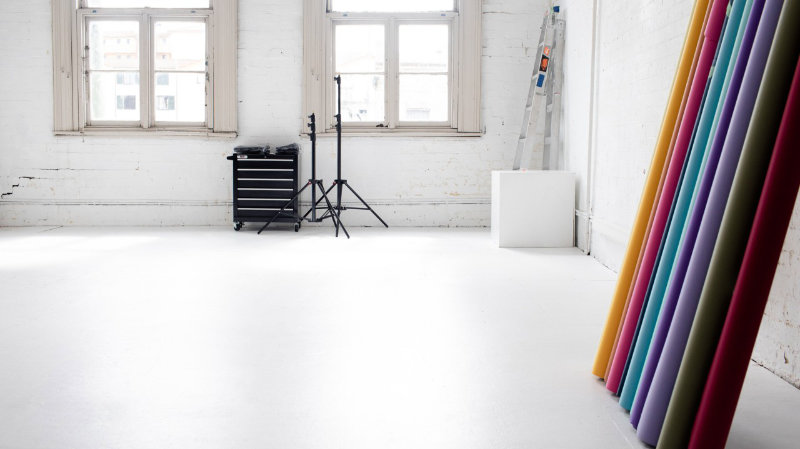
The main space is where most of your day happens, and its two most important qualities are size and light.
Size matters more than people expect. A room can look enormous in a wide-angle listing photo and still feel tight once you have a light stand, a backdrop, a clothing rack and three people in it. What you actually want to know is how far you can get your subject away from the backdrop, and how far you can get yourself away from your subject. That distance is what lets you shoot at a longer focal length, throw the background out of focus, and stop light from spilling where you do not want it.
Light is the other half. Our studio is a natural-light space with big windows, which gives you soft, flattering, directional light for a large part of the day, and it is genuinely lovely for portraits, lifestyle and content work. But a good studio should also let you shut that light down and build your own from scratch. Blockout options, flags and a set of strobes turn the same room into a fully controlled environment. If you are still working out which approach suits your work, our guide to mastering natural and studio light walks through when each one wins.
Things worth asking about before you book:
- Ceiling height. Low ceilings limit how high you can boom a light and how much backdrop you can pull down. Anything under about three metres starts to restrict you.
- Window direction and time of day. South-facing windows give you consistent, even light. If a studio is north or west facing, ask what the light does at the hour you have booked.
- Power points. More than you think, and spread around the room, not all clustered on one wall.
- Floor surface. A neutral floor you can shoot on is a bonus. A patterned or heavily coloured one is a constraint you will have to work around.
Backdrops, and why paper rolls still rule
Almost every studio you hire in Sydney will have backdrop support, and most will have a selection of seamless paper rolls in white, grey and black, plus a few colours.
Paper is still the default for a reason. It is genuinely seamless, it photographs cleanly, and when it gets scuffed you simply pull down a fresh metre and cut off the damaged section. That last point is worth knowing as a hirer: most studios charge for paper you use, measured by how much you pull down, so it pays to be tidy and to plan your setups rather than rolling through three colours on a whim.
Beyond paper, look for canvas or muslin for a more textured, painterly background, and for any built-in features like a plain wall, a corner cove or a textured surface you can shoot against for free.
The green room is the part people forget
This is the bit that separates a studio from an empty room, and it is the thing first-time hirers almost never think to ask about.
A proper green room gives your subject somewhere to change, get their hair and makeup done, and simply sit down between setups. Ours has clothing racks, makeup desks with good lighting, a mirror and a steamer, which sounds mundane until you are on a fashion shoot with fifteen outfits and nowhere to hang any of them.
If you are shooting anything involving talent, wardrobe or a client who is coming along to watch, ask these questions:
- Is there a private, separate space to change?
- Is there a mirror and a makeup station with reliable light?
- Is there a steamer or iron on site? Creased clothing is the single most common avoidable problem on a shoot day.
- Where do people sit? A shoot with no seating gets uncomfortable fast.
Equipment: what is included and what is extra
This varies enormously between studios, and it is the number one source of unpleasant surprises on the day.
Some spaces are a bare room and you bring everything. Some include a basic lighting kit in the hire fee. Some, like ours, let you dry hire lighting and backdrop packages alongside the space so you can scale your kit up or down depending on the job.
Before you book, get a written answer on:
- What lights are included, and how many. “Lighting available” can mean anything from two speedlights to a full strobe kit.
- Which modifiers come with them. A strobe with no softbox is not much use for a portrait.
- Stands, booms and sandbags. These are easy to assume and painful to be without.
- Tethering and grip. A table, a C-stand, some clamps and a reflector or two make a real difference.
- What it costs to add gear. If you need one extra light, is that a small add-on or a whole separate package?
The practical stuff that decides whether your day runs well
None of this is glamorous, but it is what people actually complain about afterwards.
Access and load-in. How do you get a boot full of gear from the car to the studio? Stairs, a lift, or a flat run through a door? Ask specifically. Ask about parking too, especially in the Inner West where street parking varies street by street.
Bump-in and bump-out time. Check whether your booked hours include setup and pack-down, or whether the clock starts when you walk in. A three-hour booking with a forty-minute setup is really a two-hour shoot.
Amenities. Toilets, a kitchenette, a kettle, drinking water, and reliable wifi if you are tethering or delivering files on the day.
Climate and noise. Heating and cooling matter if you are shooting in a Sydney summer or a cold July, and so does what is happening next door if you are recording sound.
Who else is in the building. Is the studio exclusively yours for the booking, or shared? Both models are fine, but you want to know which one you are getting.
How to work out whether a studio suits your shoot
The honest answer is that there is no single best studio, only the right one for the job in front of you. A tight, controlled product shoot and a flowing fashion editorial want very different rooms.
Our advice, after years of watching shoots come together in this space, is simple: write down the three things your shoot cannot succeed without, then ask about only those three first. For a headshot day it might be consistent light, a plain backdrop and a quick turnaround between subjects. For a branding shoot it might be varied backgrounds, natural light and a green room. For product photography it might be a table, controllable light and space to build a set.
Once you know your non-negotiables, everything else is a nice-to-have, and choosing gets much easier. If you want a fuller walkthrough of the whole process, our complete guide to hiring a photography studio in Sydney covers booking, budgeting and preparation end to end, and our cost guide sets out what you should expect to pay.
Frequently Asked Questions
Do I need to bring my own lighting to a photography studio in Sydney? It depends on the studio. Some hires are for the space only, while others include a lighting kit or let you add one. At Desk and Studio you can hire the space on its own or dry hire lighting and backdrop packages with it, so you only pay for what your shoot actually needs.
How much space do I need for a portrait shoot? As a rough guide, allow at least two to three metres between your subject and the backdrop, and another three to four metres between you and your subject if you want to shoot at an 85mm or longer. Less space is workable, it just means shorter lenses and more light spill to manage.
Is a natural light studio suitable for professional work? Absolutely. Natural light is beautiful for portraits, lifestyle, fashion and content work, and many commercial photographers prefer it. The key is that the studio also lets you control or block that light when a job calls for something more precise.
Can I visit a studio before I book? You should, and most studios will welcome it. Seeing the room, the light and the green room in person tells you more in ten minutes than an hour of scrolling photos. We are always happy to show people around.
What is a green room and do I really need one? A green room is the changing and preparation area beside the shooting floor, usually with clothing racks, makeup desks, a mirror and a steamer. If your shoot involves talent, wardrobe changes or hair and makeup, it is close to essential. For a solo product shoot, less so.
Come and see the space for yourself
The truth is that a studio only really makes sense when you are standing in it. You feel the light, you see how far you can move, and you start picturing your shoot in the room rather than trying to imagine it from a listing.
If you are planning a shoot in Sydney and want a space with generous natural light, proper backdrops, a well set up green room and lighting you can hire alongside it, we would love to show you around. Book now to secure your studio time, or get in touch if you would like a tour first. Whatever you are making, we would be glad to have you shoot it here.
More Articles
- Photo Studio Hire by Area: Comparing Sydney Inner West, CBD and Alexandria
- Content Studio Hire in Sydney: Shoot a Month of Social Content in One Session
- Your Studio Shoot Day Run Sheet: How to Plan a Half Day or Full Day Hire in Sydney
- Natural Light Studio Hire in Sydney: How to Make the Most of a Daylight Studio
- How Much Does a Hot Desk Cost in Sydney? Day, Week and Month Rates
- Hiring a Studio for Dance, Movement and Performer Portraits in Sydney
- Photography Space for Rent in Sydney: What You Actually Get
- Hiring a Studio for a Beauty, Hair or Makeup Portfolio Shoot in Sydney
- Hiring a Studio for Family and Kids Photography in Sydney
- Hiring a Studio for a Fashion or Editorial Shoot in Sydney
- What to Expect Inside a Sydney Photography Studio
- Hiring a Studio for Headshots: How to Run a Smooth Headshot Day in Sydney
- How to Hire a Photography Studio for a Day in Sydney
- Affordable Photography Studio Hire in Sydney: How to Shoot on a Budget
- Renting Your Own Photography Studio vs Hiring by the Hour in Sydney
- How to Hire a Studio to Run Your Own Photography Workshop or Class in Sydney
- Product Photography in a Hired Studio: How to Plan, Light and Shoot Like a Pro
- Choosing Studio Lighting to Rent: A Photographer's Guide to Lights, Modifiers and Backdrops
- Your First Studio Photography Shoot: A Beginner's Guide
- Photography Studio Rental in Sydney
- Photography Workshops in Sydney and How to Choose One
- How to Find a Photo Studio Near You in Sydney
- Photo Studio Hire in Sydney's Inner West
- How to Choose the Right Photoshoot Space in Sydney
- Self-Shoot Studios: How to Take Your Own Photos in a Hired Space
- How to Hire a Studio for a Boudoir or Portrait Shoot
- How to Hire a Photography Studio in Sydney: The Complete Guide
- How Much Does It Cost to Hire a Photography Studio in Sydney?
- Hot Desk & Creative Coworking in Sydney's Inner West
- Hiring a Video Studio in Sydney: Green Screen, Lighting and Sound
- Dry Hire Explained: Renting Studio Lighting & Backdrops in Sydney
- Planning a Content or Personal Branding Shoot in a Sydney Studio
- Click, Learn, Repeat: A Photographer’s Growth Guide
- The Power of Versatility: Mastering Natural and Studio Light in Photography